The modern sports landscape has undergone a dramatic transformation, with private equity powerhouses reshaping team ownership across major leagues. At the forefront stands Harris Blitzer Sports & Entertainment (HBSE), a conglomerate with significant stakes in NFL, NBA, NHL, and Premier League franchises. While this consolidation has created impressive valuations reaching $14.58 billion, it raises critical concerns about sports culture, fan engagement, and community connections.
The Rise of Corporate Sports Ownership
Private equity’s infiltration into professional sports represents more than investment strategy—it signals a fundamental shift in franchise operations. Traditional ownership models, characterized by passionate local investors with deep community ties, are being replaced by corporate entities focused on asset optimization and return maximization.
HBSE’s portfolio across multiple premier leagues demonstrates how private equity firms treat sports teams as diversified investment vehicles rather than community institutions. Each acquisition represents another data point in a broader financial strategy designed to capitalize on sports’ growing global appeal and media valuations.
Questioning Private Valuation Methods
The assertion that private valuations consistently outperform public market assessments deserves scrutiny. When sports executives claim their assets are worth more in private hands than on public exchanges, they’re arguing that market forces inadequately determine true value. This raises troubling questions about transparency and accountability.
Private ownership structures allow franchises to operate with minimal public disclosure, creating environments where valuations can be influenced by selective data presentation. Without rigorous scrutiny accompanying public trading, these valuations may reflect optimistic projections rather than demonstrated performance metrics.
The comparison to Madison Square Garden’s public trading patterns illustrates this dynamic. When publicly traded sports entities consistently trade below perceived private market values, it suggests either systematic market failure or inflated private assessments. Private markets benefit from reduced transparency requirements and selective valuation methodologies.
The Myth of Long-Term Vision
Private equity advocates cite their ability to pursue long-term strategies without quarterly earnings pressure as a key advantage. However, this argument requires examination, given private equity’s typical investment horizons and exit strategies.
Most private equity firms operate on predetermined timeframes, usually seeking exits within five to ten years. This creates inherent pressure to maximize asset values within specific periods, potentially conflicting with genuinely long-term community interests and fan loyalty development.
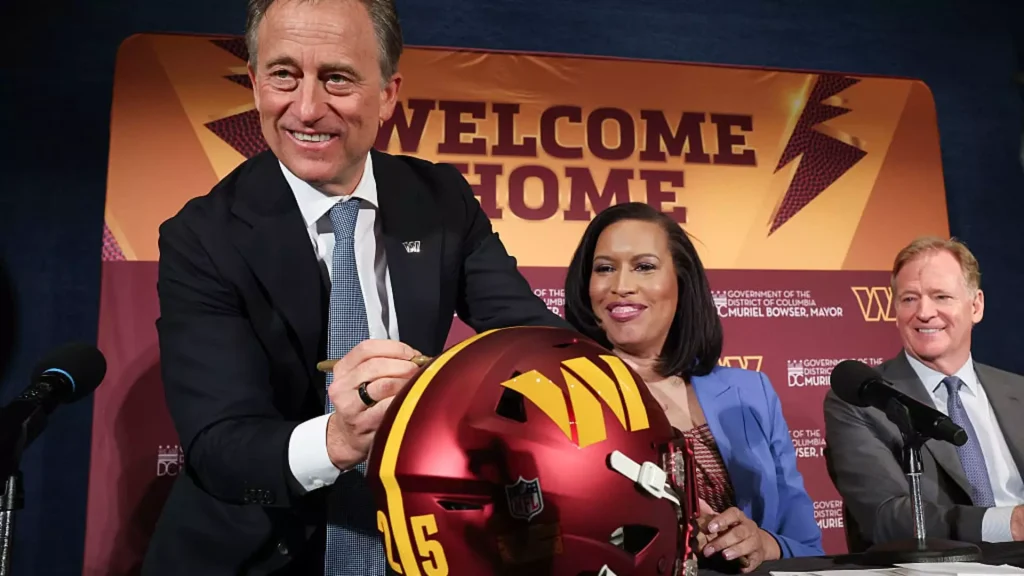
The Washington Commanders relocation exemplifies this tension between financial optimization and community preservation. While the $3.7 billion transaction promises significant returns, it prioritizes asset appreciation over historical fan connections and local identity. Such moves demonstrate how private equity ownership treats geographic and cultural attachments as secondary considerations.
Market Dynamics and Transparency Concerns
The preference for private over public ownership creates artificial market conditions that may not serve broader stakeholder interests. By maintaining private status, sports franchises avoid transparency requirements, regular auditing, and shareholder accountability characterizing public companies.
This opacity extends beyond financial reporting to strategic decision-making, executive compensation, and operational performance. Fans, local governments, and community partners lack access to information readily available if these organizations operated as public entities.
Public ownership would introduce market mechanisms providing more accurate valuations while increasing accountability. Stock prices, analyst coverage, and shareholder activism would create ongoing pressure for performance improvement, naturally aligning ownership interests with fan satisfaction and community engagement rather than pure asset appreciation.
The Commodification of Sports Culture
Private equity’s growing influence represents a commodification trend transforming sports from community entertainment into investment vehicles for wealthy individuals and institutions. This shift fundamentally alters relationships between teams, fans, and communities, prioritizing financial metrics over cultural significance.
When sports franchises become components of diversified investment portfolios, they lose their character as community institutions. Decision-making processes reflect corporate priorities rather than fan interests, local economic development, or cultural preservation. Stadium locations, ticket pricing, and team branding decisions become subordinated to financial optimization objectives.
The NFL’s recent moves to allow increased private equity stakes illustrate how leagues embrace this commodification process. While presented as modernization bringing professional management and capital access, these changes may accelerate sports’ transformation from community-centered entertainment to asset-class investments.
Future Implications and Risks
The concentration of sports ownership within private equity portfolios raises questions about competitive balance, league integrity, and fan accessibility. When multiple teams across leagues operate under common ownership structures, conflicts of interest may emerge compromising competitive authenticity.
Additionally, financial engineering accompanying private equity ownership can create leverage levels making franchises vulnerable to economic downturns. Highly leveraged sports organizations may be forced into short-term decisions damaging long-term competitive positioning or fan relationships to meet debt service requirements.
The bubble-like characteristics of current sports valuations, driven partly by private equity interest and media rights inflation, suggest potential instability ahead. If valuations correct significantly, overleveraged franchises may face financial distress impacting league operations and fan experiences.
Conclusion
The sports industry stands at a crossroads between traditional community-based ownership and corporate financial optimization. While private equity brings valuable capital and management expertise, its dominance threatens to undermine cultural and social elements making sports meaningful to communities worldwide.
The $14.58 billion empire represents impressive financial engineering, but its true success should be measured by its ability to enhance rather than diminish sports’ capacity to bring communities together and create shared experiences transcending pure commercial value. The coming years will reveal whether private equity’s promises can coexist with sports’ essential role as community-centered entertainment and cultural expression.