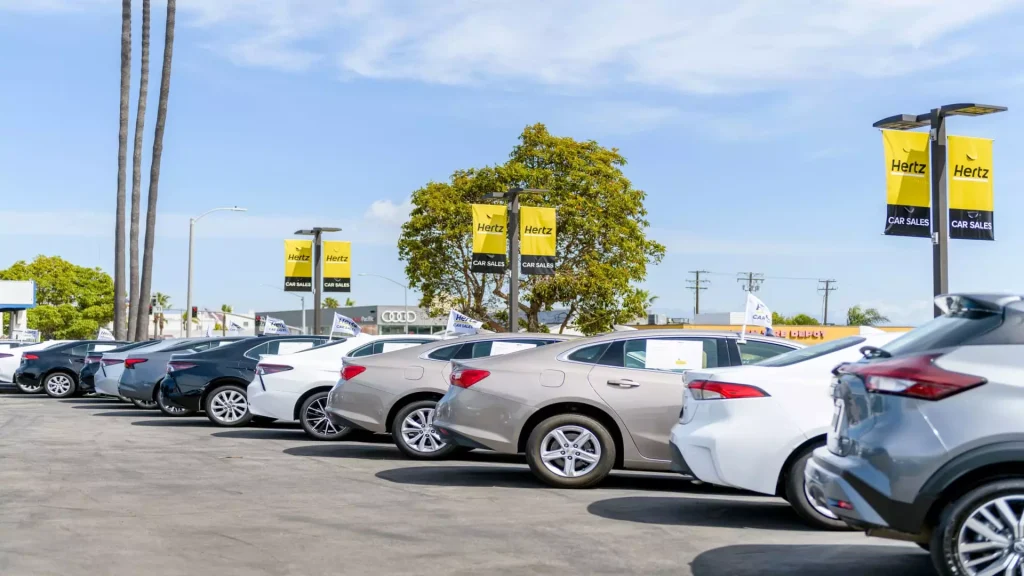
In an automotive industry grappling with profound digital transformation, legacy players are facing a stark choice: adapt or risk obsolescence. Hertz, a brand long synonymous with car rentals, finds itself at this critical juncture. Its recent, audacious move to begin selling its fleet of pre-owned vehicles directly through the Amazon Autos platform is far more than a simple expansion; it is a high-stakes bet on reinvention. This strategic pivot into a major e-commerce ecosystem represents a fundamental acknowledgment that modern consumer behavior has irrevocably shifted online, where convenience, selection, and digital transparency are the new currencies. By aligning with a titan like Amazon, Hertz is not just opening a new sales channel—it is attempting to redefine its business model and secure a new revenue stream to weather the storms of a shrinking traditional rental market.
The Strategic Imperative: A Necessary Leap into E-commerce
The decision to partner with Amazon is a direct response to a series of existential threats that have plagued Hertz in recent years. The company’s journey through bankruptcy, coupled with a tarnished brand image following a poorly executed and hastily abandoned EV strategy, highlighted deep-seated vulnerabilities. The traditional rental model, heavily reliant on business travel and tourism, proved fragile in the face of global disruptions. In this context, the Amazon partnership is a cornerstone of a broader corporate realignment, likely linked to strategic initiatives like the company’s “Back-to-Basics Roadmap.” This isn’t just about selling cars; it’s about optimizing the lifecycle of its primary asset—its vehicle fleet—and proving to investors that it can innovate beyond its legacy operations.
Integrating with Amazon’s sophisticated digital infrastructure offers Hertz a powerful toolkit for growth. The most obvious benefit is unparalleled visibility. Placing its inventory in front of Amazon’s hundreds of millions of customers instantly catapults Hertz into a digital arena teeming with younger, tech-fluent consumers who are increasingly comfortable with making major purchases online. Furthermore, this collaboration allows Hertz to leverage Amazon’s trusted platform for customer engagement and transaction processing, potentially streamlining the sales process and reducing overhead costs associated with traditional car lots. The model itself—enabling customers to browse inventory, complete paperwork electronically, and schedule a pickup at a local Hertz location—marries the ease of e-commerce with the security of a physical handover point, creating a compelling hybrid experience.
Navigating the Crowded Digital Marketplace
Despite the clear advantages, this venture is fraught with significant risks that could undermine its success. Amazon’s marketplace is no virgin territory; it is a fiercely competitive environment. Hertz will not be operating in a vacuum but will instead be vying for attention against established online automotive platforms, traditional dealerships that are digitizing their own operations, and other large-scale fleet sellers. Success will hinge on more than just presence; it will require flawless execution in inventory presentation, competitive pricing, and, most importantly, building consumer trust. The perception of “ex-rental cars” often carries a negative stigma, and Hertz must craft a powerful narrative around quality, maintenance, and value to convince buyers that its vehicles are a credible and reliable choice.
The company’s recent history casts a shadow of doubt on its ability to execute complex new initiatives. The much-publicized failure of its ambitious EV adoption plan serves as a cautionary tale. A brilliant strategy on paper was undone by operational realities, such as unforeseen maintenance costs and inadequate charging infrastructure. A similar execution gap could prove fatal in its Amazon venture. A clunky user interface, inconsistent vehicle quality, or poor customer service at the pickup locations could quickly erode the trust Hertz is trying to build. The agility of dedicated online car retailers and the deep-rooted community presence of local dealerships are formidable challenges that Hertz must be prepared to meet with operational excellence.
A Defining Moment: Evolution or Desperation?
Ultimately, this move into large-scale digital retail should be seen as a necessary, if belated, evolutionary step. In an era where even vehicle manufacturers are exploring direct-to-consumer online sales, clinging to a rental-centric model is no longer a sustainable long-term strategy. From a market-driven perspective, embracing innovation and leveraging powerful platforms to meet consumer demand is the only viable path to recovery and future growth. The question is not whether Hertz should be doing this, but whether it can do it effectively and profitably.
The partnership with Amazon is a gamble that underscores a fundamental truth for all legacy companies: survival in the modern economy depends on the ability to adapt to digital-first consumer preferences. For Hertz, this is more than an experiment; it is a defining test of its capacity for genuine renewal. Whether this bold strategy will mark the beginning of a renaissance for the storied brand or merely serve as a footnote in its struggle for relevance will be determined not by the ambition of the plan, but by the quality of its execution. The entire industry will be watching to see if this legacy giant can successfully navigate the digital currents and reinvent itself for a new era.