The entertainment industry finds itself at a critical juncture as Hollywood’s traditional strategies increasingly fail to deliver the box office renaissance executives desperately seek. Despite achieving summer ticket sales of approximately $3.7 billion, representing a modest increase from the previous year’s $3.67 billion, the underlying metrics reveal an industry struggling with fundamental strategic misalignment.
This marginal improvement masks deeper systemic issues that threaten long-term theatrical viability. The reliance on franchise properties, remakes, and sequels—while seemingly safe investments—has created a creative stagnation that audiences are increasingly rejecting.
The Franchise Fatigue Phenomenon
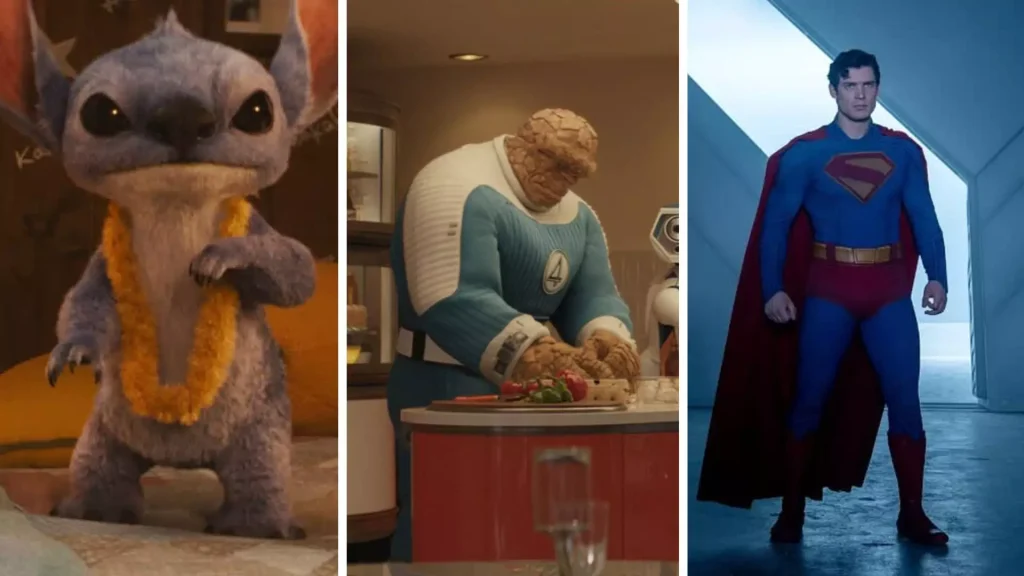
The most telling indicator of Hollywood’s strategic misstep lies in the performance of this summer’s highest-grossing films. Disney’s “Lilo & Stitch” remake and a Superman reboot failed to reach the $350 million domestic threshold, a stark contrast to previous blockbusters like “Barbie,” “Top Gun Maverick,” and “Inside Out 2,” each of which exceeded $500 million in ticket sales.
This performance gap reveals a crucial disconnect between studio expectations and audience appetite. The assumption that familiar intellectual properties automatically guarantee success has proven increasingly unreliable as viewers demonstrate growing resistance to formulaic content.
Franchise dependency has created a dangerous cycle where studios invest enormous budgets in properties with diminishing returns. The pandemic hiatus only accelerated this trend, as audiences developed more discerning tastes during their streaming-heavy consumption period. The traditional blockbuster formula—spectacular visuals, familiar characters, and predictable storylines—no longer commands the automatic audience loyalty it once enjoyed.
Evolving Audience Expectations
Modern moviegoers have fundamentally altered their entertainment consumption patterns, yet Hollywood’s response remains largely reactive rather than innovative. Audiences increasingly prioritize authentic storytelling, cultural relevance, and meaningful content over recycled formulas that feel disconnected from contemporary issues.
The theatrical experience, once considered the pinnacle of entertainment, now competes with sophisticated streaming platforms, gaming experiences, and social media content for attention. This competition has raised the bar for what constitutes compelling theatrical content, making mediocre franchise entries insufficient to drive consistent box office performance.
Streaming services have conditioned audiences to expect higher production values, complex narratives, and diverse storytelling approaches. When theatrical releases fail to exceed these elevated standards, audiences naturally gravitate toward alternative entertainment options that better satisfy their evolved preferences.
Economic Myopia and Strategic Misalignment
Hollywood’s economic strategy reveals a troubling short-term focus that prioritizes immediate returns over sustainable growth. The industry’s obsession with blockbuster spectacle has become a substitute for creative risk-taking, leading studios to invest hundreds of millions in safe franchise properties rather than diverse, original stories that could rejuvenate the cultural landscape.
This approach creates a cycle of mediocrity where artistic integrity becomes subordinated to financial projections based on past performance rather than future potential. The assumption that bigger budgets automatically translate to higher returns has been consistently challenged by box office results that favor quality and originality over spectacle alone.
The dependency on international markets to compensate for domestic shortcomings has created additional strategic vulnerabilities. While global box office figures may temporarily mask domestic decline, this approach fails to address the fundamental disconnect with core audiences whose loyalty remains essential for long-term sustainability.
Market Volatility and Unpredictable Performance
Current box office patterns demonstrate increased volatility, with ticket sales driven by sporadic big releases amid extended periods of underwhelming performance. This irregularity suggests that audiences have become more selective, choosing to attend theaters only for content that genuinely excites them rather than maintaining habitual moviegoing behavior.
AMC’s Adam Aron’s optimism about industry-wide resurgence, while understandable from a business perspective, may overlook these fundamental shifts in consumer behavior. The upcoming high-profile releases, including “Wicked: For Good,” face the challenge of proving that audiences will return to theaters for franchise content that follows traditional formulas.
The streaming revolution has fundamentally altered audience expectations regarding value propositions. Moviegoers now weigh theatrical experiences against the convenience and cost-effectiveness of home viewing, making the bar for theatrical success significantly higher than in previous decades.
Cultural Disconnection and Relevance Crisis
Hollywood’s franchise focus has created a cultural disconnection that extends beyond simple entertainment preferences. Audiences increasingly seek content that reflects their lived experiences, addresses contemporary issues, and provides genuine emotional resonance rather than nostalgic callbacks to previous entertainment properties.
The industry’s reluctance to embrace new voices, diverse perspectives, and innovative storytelling approaches has resulted in a creative homogenization that fails to capture the complexity and diversity of modern audiences. This disconnect becomes particularly apparent when comparing the cultural impact of original hits versus franchise installments.
Successful theatrical releases in recent years have typically combined familiar elements with fresh perspectives, suggesting that audiences don’t necessarily reject all franchise content but rather demand innovation within established frameworks.
Technological and Creative Innovation Gaps
While Hollywood continues investing heavily in visual effects and spectacle, the industry has lagged in developing new narrative formats, storytelling techniques, and audience engagement strategies that could differentiate theatrical experiences from streaming content.
The assumption that bigger visual effects budgets automatically create more compelling entertainment has proven increasingly questionable as audiences develop sophistication about digital spectacle. Memorable theatrical experiences now require more than impressive visuals—they demand emotional authenticity, narrative innovation, and cultural relevance.
Future Trajectory and Strategic Implications
The fall and winter release schedule will serve as a critical test for Hollywood’s current strategic direction. Upcoming releases like “Zootopia 2” and “Avatar: Fire and Ash” must demonstrate whether franchise properties can evolve beyond formulaic approaches to recapture audience enthusiasm.
Success in the current market requires studios to recalibrate their priorities, embracing risk-taking that prioritizes creative excellence over safe financial projections. The industry must develop new metrics for success that account for long-term audience engagement rather than simply opening weekend performance.
Path Forward: Strategic Realignment Necessities
Hollywood’s sustainable recovery demands a fundamental paradigm shift toward authentic storytelling that champions new voices, explores diverse genres, and acknowledges changing audience consumption patterns. The current strategy of doubling down on franchises and spectacle will likely accelerate box office decline rather than reverse it.
Studios must recognize that quality, originality, and cultural relevance provide more sustainable competitive advantages than recycled intellectual properties. This transition requires courage to move beyond CGI-dependent nostalgia toward content that genuinely resonates with contemporary audiences.
The industry’s future depends on its willingness to embrace uncertainty, invest in untested creators and concepts, and develop new models for theatrical success that align with evolved audience expectations. Only through this strategic realignment can Hollywood hope to build a sustainable future that serves both creative integrity and financial viability.
Conclusion
The current box office landscape reveals an industry at a crossroads, where traditional strategies increasingly fail to deliver desired results. Hollywood’s franchise obsession, while understandable from a risk management perspective, has created creative stagnation that audiences are actively rejecting.
Recovery requires more than incremental improvements to existing formulas—it demands fundamental strategic realignment toward authentic, innovative content that respects audience intelligence and cultural evolution. The studios that successfully navigate this transition will define the industry’s future, while those clinging to outdated approaches risk irrelevance in an increasingly competitive entertainment landscape.